Showing posts with label japanese anime. Show all posts

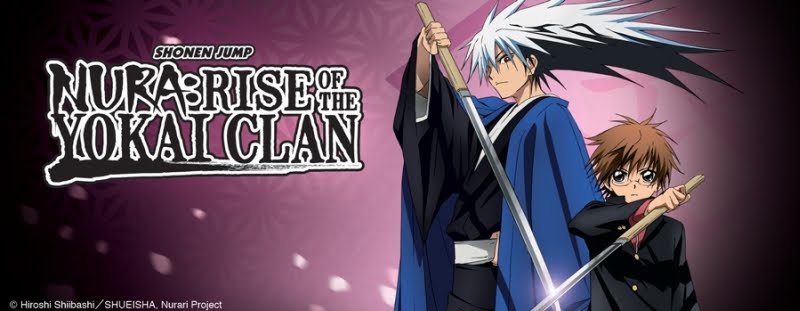
Nura: Rise of the Yokai Clan on VIZAnime.com and Hulu

Nura Rise of the Yokai Clan - anime - HuluVIZ Media, LLC (VIZ Media), is showing Nura: Rise of the Yokai Clan on VIZAnime.com just hours after the episodes are shown in Japan.
This will happen every Monday.

The videos are hosted on Hulu, as you can see on the player at VIZAnime.com.
After getting to the page, I waited...and waited...and got nothing on the player but a black screen.

So I went to Hulu and did a search on Nura: Rise of the Yokai Clan, found the page there and it loaded right up.

Maybe VIZAnime.com was just having a glitch that day.

By the way, it says on the Hulu site...
" Each Monday Hulu will add -- direct from Japan -- subtitled episodes of Nura: Rise of the Yokai Clan, one episode per week immediately following their original Japanese airdates."

So if you go to VIZ and can't see the anime, just go to Hulu.


Nura: Rise of the Yokai Clan on VIZAnime.com and Hulu, posted to http://anime-times.blogspot.com/ on July 7th, 2010

Bleach, Naruto Shippuden and Monster Hunter News

Dragon Ball Z Kai - japanese anime
Dragon Ball Z Kai and Naruto Shippuden
Over at NY Breaking News, Neo discusses Dragon Ball Z Kai airing on CW4kids this fall and the latest Naruto Shippuden English Dub Episodes on iTunes.
You can see Neo's vlog here

Monster Hunter
Okay, Monster Hunter is a game that spawned a manga (Monster Hunter Orage), not the other way around, but since the game is very popular with anime and manga fans, I thought I'd include this.
Capcom has announced that this summer, it will release its new Monster Hunter spinoff game with a Flash-animated tie-in project on Japanese television.
On August 26th, MonHun Nikki Pokapoka Airū-mura will ship for the Sony PSP console in Japan.
Full story here

Fullmetal Alchemist: Brotherhood
Fullmetal Alchemist: Brotherhood, Part 1, comes out on DVD and Blu-ray this week, and you can read a review of it here

Also coming out this week are Bleach, Vol. 28 and Kenichi: Season One.

On a side note, I have seen where you can watch Bleach Episode 272, Ichigo Vs Ulquiorra Conclusion, many places on the web, but so far, I haven’t found a single one that actually works.
If you find one that actually is a link to the episode, you can post it in the comments.
But I'll check the link before I approve it, so no funny business...LOL


Bleach, Naruto Shippuden and Monster Hunter News, posted to http://anime-times.blogspot.com/ on May 25th, 2010.

Are Anime and Manga Going Live Action?

Since DC and Marvel are rolling out (usually successful) films based on their superheroes, why wouldn't Hollywood start mining Anime?
Well they are.
Steven Spielberg is working on Ghost in the Shell, James Cameron is working on Battle Angel Alita, Peter Segal and Michael Ewing are working on Bleach and The Hughes Brothers are working on Akira.

Over at indieWIRE, guest blogger Cameron Carlson has an article about the upcoming live action films based on Anime, and a whole lot more that are in development...

" Would you buy a ticket for a big-budget, live-action anime feature? What if there were four of them released at the same time? That could be the plight facing anime fans in 2011, and while the fans of japanimation recognize the difference between a cyborg and a mobile battle suit, the general public does not."

You can read the full article here:
http://blogs.indiewire.com/thompsononhollywood/2010/05/04/anime_next_big_thing/

So with that in mind, here are a few Anime/Manga projects that have already made the leap to the big screen...

Lady Snowblood (1973)
Based on the manga by writer Kazuo Koike and artist Kazuo Kamimura.
There was a sequel, Lady Snowblood 2: Love Song of Vengeance in 1974, and a science fiction remake in 2001, released in the US as The Princess Blade.
Quentin Tarantino has said the film was a major inspiration for his Kill Bill films.

The Guyver (1991)
Based on the Bio-Booster Armor Guyver manga series written by Yoshiki Takaya, it spawned a sequel, Guyver: Dark Hero in 1994.

City Hunter (1993)
A Hong Kong martial arts action comedy film based on the manga series written and illustrated by Tsukasa Hojo.
Notable because it starred Jackie Chan as Ryo Saeba.

Hana Yori Dango (1995)
Based on the shōjo manga series Boys Over Flowers by Yoko Kamio
In 2008, Hana Yori Dango Final was released in theatres on as the end of the live action Japanese TV series.

Crying Freeman (1995)
A French and Canadian produced action film based on the manga by Kazuo Koike & Ryoichi Ikegami.

Blue (2001)
A Japanese romantic drama based on the manga Blue by Kiriko Nananan.

Blue Spring (2001)
A Japanese film based on a manga by Taiyō Matsumoto.

Doing Time (2002)
Based on the manga by Kazuichi Hanawa.

Cutie Honey (2004)
Starring Japanese model Eriko Sato and based on the manga and anime series Cutie Honey.

A Battle of Wits (2006)
This Hong Kong historical action drama film, was based upon a Japanese historical novel and a manga series written by Hideki Mori.

Death Note (2006)
Not one, but three films were based on the manga and anime series by Tsugumi Ohba and Takeshi Obata.
Death Note was released on June 17, 2006, Death Note: The Last Name was released on November 3, 2006 and a spin-off L: Change the World, was released on February 9, 2008.
This film is one of those set for a remake by Warner Bros.

Dragonball Evolution (2009)
Based of course on the Japanese manga and anime series written and illustrated by Akira Toriyama.
Despite the fact the film flopped at the box office, with critic and with fans, there is a sequel rumored
The Top Ten Anime Girls - Eve - Black Cat


Number Two - Eve (Black Cat)

Eve, the genetically engineered bio-weapon that looks like a young girl from the Anime and Manga Black Cat comes in at number number two on the list.
Using nanotechnology Eve can transform her body into various types of offensive and defensive weapons.
At first she could only do parts, but later, she developed the ability to transform her entire body into a weapon, though it puts quite a strain on her.

You have to admit, having a person on your side that can turn her arms into blades, hammers, shields etc., and turn her hair into fists and more blades, turn her skin into steel, sprout wings and swim underwater like a mermaid has it's advantages.

Eve was raised to be an emotionless killing machine and designed to be the ultimate soldier.

She is usually called "Princess", or "Hime-chan" by Train.


Eve versus Leon (Black Cat)


Eve - Black Cat, posted to http://anime-times.blogspot.com/ on April 1st, 2010

The Top Ten Anime Girls, Rei Ayanami

Image Hosted by ImageShack.us

9. Rei Ayanami
If you don't know what Neon Genesis Evangelion is, you must be new to anime.
Rei Ayanami is just one of the characters in the series.
But the pilot of Evangelion Unit 00 appears to be very popular.
Just based on sculptures alone, everybody seems to want her in some form.

Ouran High School Host Club

Ouran High School Host Club, anime, manga

Ouran High School Host Club is a manga and anime series done by Bisco Hatori.
The Manga has been serialized in Hakusensha's LaLa magazine since August 5, 2003.
Ouran High School Host Club follows Haruhi Fujioka, a scholarship student at Ouran High School, and the other members of the host club.
The romantic comedy focuses on the relationships within and without the Club and satirizes the stereotypes that endure in series aimed at girls.
Besides the anime, the manga has been adapted into a series of audio dramas and a visual novel by Idea Factory.

The animated television series, Ouran High School Host Club, premiered April 5, 2006 on Japan's NTV network. The series was directed by Takuya Igarashi and written by Yōji Enokido, who also wrote Revolutionary Girl Utena and The Melody of Oblivion, while the character designer and chief animation director for the series was Kumiko Takahashi, who did Cardcaptor Sakura. It also features a different cast from the audio dramas, with Maaya Sakamoto starring as Haruhi Fujioka and Mamoru Miyano portraying Tamaki Suou. Ouran High School Host Club finished its run on September 26, 2006, totaling to twenty-six episodes.

The series is licensed for distribution in North America by FUNimation Entertainment. The first anime DVD set containing the first thirteen episodes will be released on October 28, 2008 in North America. The second volume will follow in January 2009 containing the last thirteen episodes.

Detective Conan / Case Closed

Detective Conan, Case Closed

Detective Conan is a Japanese detective manga and anime series written and illustrated by Gosho Aoyama and has been serialized in Weekly Shōnen Sunday since 1994.
In the English speaking world it is called Case Closed because of legal issues with the Conan the Barbarian franchise.

Case Closed is about the adventures of Jimmy Kudo, a young detective who was investigating a secret criminal organization when he was knocked unconsious and given a drug that was supposed to kill him, but instead it turned him into a prepubescent boy.
The manga and anime versions are both very popular and the series has been adapted into 12 Golden Week movies. Starting on April 17, 1997, one movie a year has been released. Ten of those movies have been in the top ten each year. Nine OVAs (Original video animation released on home video formats) have also been released.

The Prince of Tennis


You know I was really surprised that this anime is still as popular as it is.

The Prince of Tennis is a popular Japanese manga and anime written and illustrated by Takeshi Konomi.
First published in Japan in Shueisha's Weekly Shōnen Jump in July 1999, the manga ended publication on March 3, 2008.
A total of 379 chapters were written, comprising 42 volumes. It has sold over 40 million copies in Japan.
The manga is published in English in North America by Viz Media.

It was adaptated into an anime series directed by Takayuki Hamana, animated by Trans Arts and co-produced by Nihon Ad Systems and TV Tokyo.
The anime aired in Japan on the anime satellite television network Animax and the terrestrial TV Tokyo network from October 10, 2001 to March 30, 2005, spanning a total of 178 episodes. There was also a feature movie.
In April 2006, an OVA continuation of the anime began to be released on DVD. The beginning of the second OVA series was released on June 22, 2007. The second OVA ended on January 25, 2008, and the third and final OVA started on April 25, 2008.

Since April 2003, over fifteen stage musicals have been produced for the series. An animated movie was released in 2005, as well as a live action movie in 2006. In addition, a 22-episode-long live-action television drama began airing in China on July 25, 2008. The franchise has also had a long running radio show, several video games, soundtracks, and other assorted merchandise and collectibles.


Chobits

Chobits, Angelic Layer, anime, manga, japanese

Chobits is a Japanese manga created by Clamp (a Japanese mangaka group).
It was published by Kodansha in Young Magazine from February 2001 to November 2002 and was collected in eight bound volumes.
Unlike most stories by Clamp, Chobits is a seinen (manga that is generally targeted at an 18–30 year old male audience) series, specifically of the magical girlfriend variety, using robotics and computers as a subplot.
Chobits is commonly mistaken for shōjo (manga marketed to a female audience roughly between the ages of 10 and 18) because of its strong romantic themes and flowery art style.
Chobits was adapted as a 26-episode-long anime television series broadcast on TBS and Animax from April to September 2002.
It has spawned a video game as well as merchandise such as figurines, collectable cards, calendars, and artbooks.

The series tells the story of Hideki Motosuwa, who finds an abandoned persocom, or personal computer with human form, that he names Chi after the only word she initially can speak. As the series progresses, together they explore the mysteries of Chi's origin and questions about the relationships between humans and persocoms. The manga is set in the same universe as Angelic Layer, taking place a few years after the events of that story, and like Angelic Layer, it explores the relationship between humans and electronic devices shaped like humans. Chobits branches off as a crossover to many other stories in different ways, such as Tsubasa: Reservoir Chronicle and xxxHolic.


Technorati Tags:

Fruits Basket / Furuba

Fruits Basket Pictures, Images and Photos

Fruits Basket, sometimes abbreviated Furuba, is a Japanese manga series by Natsuki Takaya. It was serialized in the semi-monthly Japanese magazine Hana to Yume, published by Hakusensha, from 1999 to 2006. The series was also adapted into a 26-episode anime series, directed by Akitaro Daichi. The series tells the story of Tohru Honda, an orphan girl who, after meeting Yuki, Kyo, and Shigure Sohma, learns that thirteen members of the Sohma family are possessed by the animals of the Chinese zodiac and are cursed to turn into their animal forms if they embrace anyone of the opposite gender.

The word "Fruits" in the title is always plural; the spelling originates from the transcription of the English word "fruit" into Japanese, where because there is no "tu" sound, "tsu" is used instead. The title comes from the name of a popular game played in Japanese elementary schools, which is alluded to in the series.

The Melancholy of Haruhi Suzumiya

Image Hosted by ImageShack.us

The Melancholy of Haruhi Suzumiya is the name of the 2006 television anime about a girl who, unknown to her, possesses the power to change reality. The story is based on the series of novels, the first of the same name. The anime adaptation, directed by Tatsuya Ishihara and produced by Kyoto Animation, shares the first novel's plotline, contained in six self-contained episodes. Intermingled between them were seven episodes based on chapters from the second, third, fifth, and sixth novels. The ninth episode, "Someday in the Rain", was a new totally story written for the anime by Nagaru Tanigawa, the author of the novels. The fourteen episode series premiered in Japan on April 2, 2006 and aired until July 2, 2006. Notably, these episodes were not originally broadcast in chronological order.

Soon after the show aired, Kadokawa Shoten received offers from companies in regards to licensing the anime, manga, and novels. On December 22, 2006, the website asosbrigade.com revealed that the anime version of The Melancholy of Haruhi Suzumiya was licensed for North American distribution by Kadokawa Pictures USA, who sublicensed production and distribution to Bandai Entertainment. The first and second DVDs were released on May 29, 2007 and July 3, 2007, respectively, with the third and fourth on September 25, 2007 and November 6, 2007.

The series was extremely popular and has become a cult television series with a large and dedicated fanbase. As of December 2006, The Melancholy of Haruhi Suzumiya is the most popular anime in Japan according to Newtype magazine. Similar to Star Trek's fans as Trekkies, fans of the series call themselves "Haruhiists", and the collective fandom is known as Haruhiism.

Eureka Seven / Psalms of Planets Eureka Seven


Eureka Seven, known in Japan as Psalms of Planets Eureka Seven, is a mecha anime TV series by Bones. Eureka Seven tells the story of Renton Thurston and the outlaw group Gekkostate, his relationship with the enigmatic mecha pilot Eureka, and the mystery of the Coralians. Bandai produced three video games based on Eureka Seven; two of them are based on events prior to the show, while the third is based on the first half of the show. Both the original concept of the anime and the video game Eureka Seven vol.1: New Wave have been adapted into manga series, as well. The TV series has also been adapted into a series of four novels in Japan.

A movie based on the series was announced in the May issue of Newtype. The creators announced it will contain a new mythos, despite still featuring Renton and Eureka as the main characters. It will be produced by Kinema Citrus.

The series' origins can be traced to a pitch of a mecha anime series that Bandai had proposed to the animation studio Bones. At first, the studio rejected it, but later reversed its position because it had already planned to create an anime using mecha designs by Shoji Kawamori. With the appointment of director Tomoki Kyoda and writer Dai Satō, Bandai's proposal was more or less scrapped and the staff began work on their own series that would become Eureka Seven.

While conceptualizing Eureka Seven, director Tomoki Kyoda wished to design the series as one that would at first focus on the personal elements and conflicts of the characters, then subsequently move the framework into a broader scale and perspective. The series' two halves each have their own very clear focus that reflects this design choice. The series was Tomoki Kyoda's first as chief director for a TV anime; his major credits to date before that were his position as Assistant director of the RahXephon TV series and subsequent position of Director for the movie adaption, also from studio Bones. RahXephon creator and director Yutaka Izubuchi provided additional design works for Eureka Seven, as well.

Code Geass: Lelouch of the Rebellion


Code Geass: Lelouch of the Rebellion is an anime television series created by Sunrise. Directed by Gorō Taniguchi and written by Ichirō Ōkouchi, both of whom had earlier worked on another Sunrise series, the acclaimed Planetes, Code Geass: Lelouch of the Rebellion features original character designs by Clamp.

The first season of the series premiered across Japan on MBS from October 5, 2006,and concluded its run on July 28, 2007, after running for 25 episodes. A second season and sequel to the series, Code Geass: Lelouch of the Rebellion R2, premiered on MBS and TBS on April 6, 2008.

Both seasons of Code Geass have been licensed for release in the United States and Canada by Bandai Entertainment, and the first season began airing on Cartoon Network's Adult Swim programming block in the U.S. on April 27, 2008.

Since its premiere, Code Geass: Lelouch of the Rebellion has collected numerous awards and accolades. At the sixth annual Tokyo Anime Awards held at the 2007 Tokyo International Anime Fair, Code Geass won the best TV anime series award. In noted Japanese anime magazine Animage's 29th Annual Anime Grand Prix, Code Geass won the most popular series award, with Lelouch Lamperouge also being chosen as the most popular male character and "Colors" being chosen as the most popular song. At the first Seiyū Awards held in 2007, Jun Fukuyama won the award for best actor in a leading role for his performance as Lelouch Lamperouge in the series, while Ami Koshimizu won the award for best actress in a supporting role for her performance as Kallen Stadtfeld. Furthermore, Code Geass won the award for Best TV Animation at the twelfth Animation Kobe event, held annually in Kobe, Hyōgo Prefecture.

Fate/stay night

Image Hosted by ImageShack.us

Fate/stay night is a Japanese eroge visual novel game created by Type-Moon, which was originally released on January 30, 2004, for the PC. It has been adapted into an anime television series, which was animated by Studio Deen and aired between January 6, 2006, through June 16, 2006.

The official announcement and teaser trailer of the anime were first shown at the Rondo Robe 2005 "-Gate to Date-" event in Japan on June 26, 2005, and a curtain-raiser DVD was released in Japan during November 2005. An all-ages version of Fate/stay night, titled Fate/stay night Réalta Nua, was released for the PlayStation 2 on April 19, 2007, and features the seiyū from the anime series. The series has been adapted into a manga series, which began serialization in the monthly Shōnen Ace magazine. is a Japanese eroge visual novel game created by Type-Moon, which was originally released on January 30, 2004, for the PC. It has been adapted into an anime television series, which was animated by Studio Deen and aired between January 6, 2006, through June 16, 2006.

The official announcement and teaser trailer of the anime were first shown at the Rondo Robe 2005 "-Gate to Date-" event in Japan on June 26, 2005, and a curtain-raiser DVD was released in Japan during November 2005. An all-ages version of Fate/stay night, titled Fate/stay night Réalta Nua, was released for the PlayStation 2 on April 19, 2007, and features the seiyū from the anime series. The series has been adapted into a manga series, which began serialization in the monthly Shōnen Ace magazine.

D.N.Angel


D.N.Angel is a Japanese manga series written and illustrated by Yukiru Sugisaki. There was also an anime adaptation and a PS2 video game.

Yukiru Sugisaki's D.N.Angel manga started in Japan in Monthly Asuka in 1997 and inspired a 26-episode anime adaptation in 2003. The manga is published in English by Tokyopop. The manga currently consists of 11 volumes in tankōbon form. The series went on an extended hiatus after the August 2005 issue of Monthly Asuka, but the magazine announced in its March issue (released on January 24, 2008) that the manga would resume the next month in its April issue. This issue was released in Japan in February, and it featured a 123 page comeback issue, including 20 free extra illustrations by Sugisaki.

A series of drama CDs (D.N.Angel Wink) were also released, although it should be noted that the seiyū cast for the drama CDs is largely different from the anime cast.

The 26 episode television series aired in Japan on TV Tokyo, and has been released on DVD in the US and the UK by ADV Films and in Australia by Madman Entertainment. The final broadcast of the anime coincided with the release of the game, which carried on the story from that point. Due to the anime series having a different storyline than the manga series, a two-volume special manga series was serialized in Monthly Asuka titled D.N.Angel TV Animation Series in 2003 which followed the anime storyline.

Daisuke Niwa is a 14 year-old-boy who has a special genetic ability: Whenever he sees or thinks about his crush, Risa Harada, he turns into the infamous phantom thief Dark. During the start of the anime, Daisuke carries a picture of Risa Harada in his back pocket for such occasion. This will continue until his crush learns to love both him and Dark.

Satoshi Hiwatari is a student at the same school as Daisuke and the Harada twins and also the Commander of the police force, heading the investigation on Dark. This is because he is a member of the Hikari family, a clan of artists which has opposed the Niwa family of thieves for centuries. Satoshi has Krad, Dark's opposite and, like him, part of the Hikari artwork "Black Wings", within him in much the same way Daisuke has Dark within him.

Interestingly enough, Risa falls in love with Dark, and proceeds to do all sort of absurd things to get him to go out with her, which he eventually does. She has also kissed him on more than one occasion, and it is hinted that Dark loves Risa; but Dark claims that he does not love her, and that (according to the anime) Risa's grandmother, Rika, is the only woman he has ever loved. In the manga, Dark's reasons for rejecting Risa seem to be so that she is not hurt by the fact that he is immortal and not really human, and therefore cannot participate in a functional relationship. As expected, Risa doesn't really listen to him and continues to try to get him to go out with her.

During much of the plot, Satoshi Hiwatari's (adoptive) father, who is a high ranking Police Officer, happens to butt in, and ruin a few of Hiwatari's plans to capture Dark. His father also plans to capture Dark himself. But Dark and Daisuke always manage to escape his plans.

Trigun


Trigun is a Japanese manga series written and illustrated by Yasuhiro Nightow, with an anime adaptation released in 1998 and an animated movie currently in production for a 2009 release. Madhouse produced the 26 anime episodes for Trigun, and they are also working on the upcoming movie. As of April 2007, Trigun has ended in Japan, currently spanning 102 chapters and 14 tankōbon volumes.

Known for its Space Western theme, Trigun is about a man named "Vash the Stampede" and the two Bernardelli Insurance Company employees who follow him to minimize the damage caused by his appearance. Most of the damage attributed to Vash is caused by bounty hunters after the "60,000,000,000$$" (sixty billion "double dollars") bounty on Vash's head for the destruction of the city of July. However, he cannot remember the incident clearly due to amnesia. Throughout his travels, Vash tries to save lives using non-lethal force. He is occasionally joined by a priest, Nicholas D. Wolfwood, who is an excellent gunfighter like Vash. As the series progresses, it is revealed that he was actually assigned by Knives to "protect and guard" Vash. Later, he also become a target by a member of the band of assassins, the Gung-Ho Guns, for not following the change in "orders" ( to eliminate Vash).

As the series progresses, more is gradually learned about Vash's mysterious history and the history of human civilization on the planet Gunsmoke. The series often employs comic relief and is mostly light-hearted in tone. It also involves moral conflict pertaining to the morality of killing other living things, even when justified.


technorati tags: trigun movie, trigun manga, anime gallery, anime manga, anime movie

Viper GTS

Viper GTS is a three episode anime OVA series, which is based upon a popular H anime video game series.

The plot of the series centers around three succubi, Carrera, Mercedes and Rati, who are summoned to Earth to capture souls, which are then processed into brilliant gems.

The series and all the devils are named after automobile models or companies. Viper GTS is named after Dodge's Viper GTS (a coupe model of the famous automobile), Carerra is named after the Porsche 911 Carrera, Mercedes is named after Mercedes-Benz, and Alpina after the BMW tuning company Alpina Burkard Bovensiepen. Rati might be derived from Maserati, but is also the name of the Hindu goddess of love.

The Viper M1 h game in the Hyper Viper Animation series for the PC was released in 1998.
Viper V16 was released in 2002 for the PC by the now defunct Sogna.

VIPER GTS (DVD MOVIE)

Vulgar Ghost Daydream / Teizokurei Daydream / Ghost Talker's Daydream

Image Hosted by ImageShack.us
Vulgar Ghost Daydream (Teizokurei Daydream) is a shōnen manga by Saki Okuse (story) and Sankichi Meguro (art), set in modern Japan. As of 2006 there are 9 volumes available (ongoing story, with 10 volumes planned) also adapted as a four episode OVA. The English version released by Geneon changed the title to "Ghost Talker's Daydream", which is not a direct translation of the formal manga title.

This story is centered on a main character named Saiki Misaki who has two jobs, neither of which she is particularly happy with. Officially she is a dominatrix in a BDSM club who writes a column for a sex magazine. Additionally she works for a government agency, The Livelihood Preservation Group, as a necromancer. The term necromancer in this story refers to a person who can speak to and see ghosts, and who sometimes can allow the ghosts to speak with their voice to people who cannot see the ghost. Her government job usually entails helping to remove a troublesome ghost. Misaki considers her government job to be less respectable than her work in the sex industry.

There are many smaller story arcs within the story, although in most cases these stories are important to the main narrative. In some cases they introduce important characters, and in others they are used to explain motivations pertaining to the main characters. In general, these smaller story arcs consist of one or two chapters.

There are three major characters, at least one of which is in every chapter with the exception of chapter 16 Dead Mans Hand. In order of introduction they are: Saiki Misaki, Mitsuru and Souichirou. Many reoccurring and often important characters also populate the series.

The Japanese title translates as teizoku = vulgar + rei = ghost. However there is a pun on the word rei, which can also refer to a companion when spoken. In other words it can be said either Vulgar Ghost or Vulgar Companion, and Misaki Saiki is a professional dominatrix who can also speak to ghosts. A dominatrix could be considered a vulgar companion.


Technorati Tags:

Super Robot Wars

Image Hosted by ImageShack.us
Super Robot Wars (abbreviated as SRW) is a series of tactical role-playing video games produced by the Japanese gaming company, Banpresto, a division of Bandai, for various video game consoles and video game handheld consoles. The games' main feature is the use of mecha units from multiple Japanese anime and manga titles, mixing them together in a battle simulation and adding a complex plot involving some of their respective storylines, characters, and backgrounds. Another feature is a simple menu interface that can be understood by the gamer, even if he or she does not know how to read Japanese.

The very first game in the franchise was released for the Nintendo Game Boy in 1991. The first animated mecha series featured on the game (and the ones usually present in all the series' games) are Mazinger Z, Getter Robo, and the earliest incarnations of Mobile Suit Gundam. The first two, both creations of famous Japanese manga artist, Go Nagai, and his production company, Dynamic Productions, are representatives of the super robot type of units, while Gundam, realized by animator Yoshiyuki Tomino, represents the real robot units. It is a tradition for a Super Robot Wars game to include a Mazinger, Getter and a Gundam series, forming what fans call the "Holy Trinity", but as of July 2007, only the Mazinger franchise has appeared in every non-original incarnation of Super Robot Wars.

As more games were released, more characters, units and storylines were added to these games, both from existing mecha series and/or original units designed by Banpresto, exclusively for the games. As the number of series involved in the games increased, the stories have become increasingly complex.

Some series that have been featured, including Neon Genesis Evangelion and Gundam, are well-known worldwide, whereas others, such as Heavy Metal L-Gaim and Raideen, have little to no fame at all outside of Japan. Because much of the appeal of any Super Robot Wars title resides in the player's knowledge of and familiarity with the various series involved, the games are most successful and have their biggest fanbase in Japan. There is, however, a small but loyal fanbase for the games, internationally. It was widely believed that the series would never see release outside of Japan, largely due to potentially complicated rights and licensing issues (a problem that also affects other games, such as Jump Superstars). Because of this, fan translations of some of the games have been made.

On March 3, 2006, Atlus USA released two Original Generation titles for the Nintendo Game Boy Advance in North America, thus making them the first games in the series to ever see release outside of the Asian market. Because the Original Generation lineup uses original robots and characters not from any anime or manga series, these games do not have the licensing problems that other games might have.

Super Robot Wars Advance Portable for Sony PSP [Asian Version]


technorati tags: anime network,cartoon anime,manga,anime videos,anime movies,japanese anime,anime gallery,anime,anime character,japan anime,anime images,history of anime,all anime,anime pictures

The Girl Who Leapt Through Time ( Toki wo Kakeru Shoujo )


The Girl Who Leapt Through Time is an animated Japanese film produced by the animation studio Madhouse and distributed through Kadokawa Herald Pictures, first released in theatres in Japan on July 15, 2006. The film was later released on DVD on April 20, 2007 in Japan in regular and limited editions. A German RC2 DVD (with German and Japanese dub and German and Polish subtitles) was released on September 24, 2007 by Anime Virtual/AV Visionen. A manga story, set as a prelude to the film, was serialized in Kadokawa Shoten's Shōnen Ace manga magazine between April 26, 2006 and June 26, 2006; the chapters were later collected into a single bound volume which went on sale on July 26, 2006.

On December 9, 2007 Bandai Entertainment announced that the anime film will be released as a region 1 DVD. Bandai Entertainment, who had very recently obtained the North American distributing rights to the film said in a New York press conference that they are also considering releasing the film in limited release in selected theaters in Los Angeles, New York, and possibly other locations. Bandai Entertainment did not specify whether or not they will release the film dubbed or subbed for American viewers, though they are considering both options.

Tsutsui Yasutaka's novel, Toki o Kakeru Shōjo (unofficial translation: The Little Girl Who Conquered Time) is the basis of the film, but the film is not a movie version of the book. Instead, the film is set as a continuation of the book in the same setting some twenty years later. Tsutsui Yasutaka praised the film as being "a true second-generation" of his book at the Tokyo International Anime Fair on March 24, 2006.